
题目:
给定一个由 0 和 1 组成的矩阵,找出每个元素到最近的 0 的距离。
两个相邻元素间的距离为 1 。
Given a matrix consists of 0 and 1, find the distance of the nearest 0 for each cell.
The distance between two adjacent cells is 1.
示例 1:
输入:
0 0 00 1 00 0 0输出:
0 0 00 1 00 0 0示例 2:
输入:
0 0 00 1 01 1 1输出:
0 0 00 1 01 2 1注意:
- 给定矩阵的元素个数不超过 10000。
- 给定矩阵中至少有一个元素是 0。
- 矩阵中的元素只在四个方向上相邻: 上、下、左、右。
Note:
- The number of elements of the given matrix will not exceed 10,000.
- There are at least one 0 in the given matrix.
- The cells are adjacent in only four directions: up, down, left and right.
解题思路:
关键字:最近、距离。那肯定是广度优先搜索。类似之前的文章 岛屿数量: https://mp.weixin.qq.com/s/BrlMzXTtZWdB7hRfCKNMoQ
将这个问题转化成图,那就是求每个节点 1 到节点 0 最短的路径是多少。从某个节点开始,上下左右向外扩展,每次扩展一圈距离累加1,如:
输入:1 1 10 1 00 0 0转化成图(Graph),每种颜色代表一个层级:
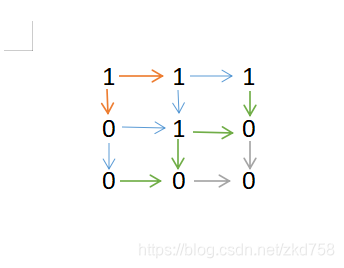
这就变成了求某个节点到某个节点的深度了。
所以这道题有两种思路:
- 以节点1为根节点,求该节点到节点0之间的深度
- 以节点0为根节点,遇到最近的节点1路径计为1,再次以记录为1的节点为根节点继续向内遍历,遇到原节点1再次累加1并得到路径2,以此类推。。。
两种方法各有优劣,
以0节点为根节点解题,要么开辟一个新的二维数组以记录路径,要么先遍历一遍将所有的节点1的值改为不可能和路径大小重复的值。
以1节点为根节点,那么就要做一些多余的重复遍历。
以0为根节点:
逻辑顺序:
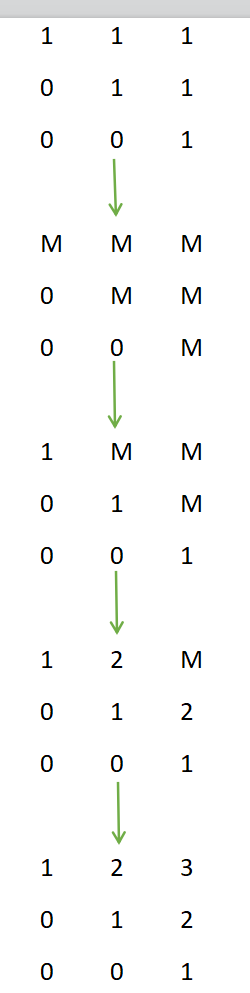
以输入下列二维数组为例:
1 1 10 1 10 0 1先把原节点值为1 的节点改为M (路径值不可能达到的值,该题中大于10000即可)
先侵染0节点附近的M节点,0节点加1之后得到1节点
再侵染1节点附近的M节点,1节点加1之后得到2节点
......
Java:
class Solution { public int[][] updateMatrix(int[][] matrix) { int row = matrix.length, column = matrix[0].length; int[][] neighbors = {{0, 1}, {0, -1}, {1, 0}, {-1, 0}};//邻居节点的索引偏移量 Queue<int[]> queue = new edList<>();//队列 for (int i = 0; i < row; i++) { for (int j = 0; j < column; j++) { if (matrix[i][j] == 0) queue.offer(new int[]{i, j}); else matrix[i][j] = Integer.MAX_VALUE;//节点值为1的节点改为一个路径不可能达到的值 } } while (!queue.isEmpty()) { int[] tmp = queue.poll(); for (int i = 0; i < 4; i++) { //得到邻居节点索引 int x = tmp[0] + neighbors[i][0]; int y = tmp[1] + neighbors[i][1]; if (x >= 0 && x < row && y >= 0 && y < column && matrix[tmp[0]][tmp[1]] < matrix[x][y]) { matrix[x][y] = matrix[tmp[0]][tmp[1]] + 1;//该节点的值得到邻居节点的路径值+1 queue.offer(new int[]{x, y}); } } } return matrix; }}Python3:
class Solution: def updateMatrix(self, matrix: List[List[int]]) -> List[List[int]]: row, column = len(matrix), len(matrix[0]) nerghbors = [(0, 1), (0, -1), (1, 0), (-1, 0)] queue = collections.deque() for i in range(row): for j in range(column): if matrix[i][j] == 0: queue.append((i, j)) else: matrix[i][j] = 10001 while queue: x, y = queue.popleft() for i, j in nerghbors: xx = i + x yy = j + y if 0 <= xx < row and 0 <= yy < column and matrix[x][y] < matrix[xx][yy]: matrix[xx][yy] = matrix[x][y] + 1 queue.append((xx, yy)) return matrix以1为根节点:
Java:
class Solution { public int[][] updateMatrix(int[][] matrix) { int row = matrix.length, column = matrix[0].length; for (int i = 0; i < row; i++) for (int j = 0; j < column; j++) if (matrix[i][j] == 1) matrix[i][j] = bfs(matrix, i, j, row, column); return matrix; } private int bfs(int[][] matrix, int i, int j, int row, int column) { int count = 0; Queue<Integer> queue = new edList<>(); Set<int[]> set = new HashSet<>(); queue.add(i * column + j);//记录索引的另一种方法 while (!queue.isEmpty()) { int size = queue.size(); count += 1; for (int k = 0; k < size; k++) { int tmp = queue.poll(); int x = tmp / column, y = tmp % column;//得到索引坐标 //处理上下左右四个邻居节点,遇到0节点直接返回count路径值 if (x + 1 < row && !set.contains((x + 1) * column + y)) { if (matrix[x + 1][y] != 0) queue.add((x + 1) * column + y); else return count; } if (x - 1 >= 0 && !set.contains((x - 1) * column + y)) { if (matrix[x - 1][y] != 0) queue.add((x - 1) * column + y); else return count; } if (y + 1 < column && !set.contains(x * column + y + 1)) { if (matrix[x][y + 1] != 0) queue.add(x * column + y + 1); else return count; } if (y - 1 >= 0 && !set.contains(x * column + y - 1)) { if (matrix[x][y - 1] != 0) queue.add(x * column + y - 1); else return count; } } } return count; }}Python3:
class Solution: def updateMatrix(self, matrix: List[List[int]]) -> List[List[int]]: row, column = len(matrix), len(matrix[0]) for i in range(row): for j in range(column): if matrix[i][j] == 1: matrix[i][j] = self.bfs(i, j, matrix, row, column) return matrix def bfs(self, i: int, j: int, matrix: List[List[int]], row: int, column: int) -> int: queue = collections.deque() count = 0 nodeset = set() queue.append((i, j)) while queue: size = len(queue) count += 1 for i in range(size): x, y = queue.popleft() if x + 1 < row and (x + 1, y) not in nodeset: if matrix[x + 1][y] != 0: queue.append((x + 1, y)) else: return count if x - 1 >= 0 and (x - 1, y) not in nodeset: if matrix[x - 1][y] != 0: queue.append((x - 1, y)) else: return count if y + 1 < column and (x, y + 1) not in nodeset: if matrix[x][y + 1] != 0: queue.append((x, y + 1)) else: return count if y - 1 >= 0 and (x, y - 1) not in nodeset: if matrix[x][y - 1] != 0: queue.append((x, y - 1)) else: return count return count继续阅读与本文标签相同的文章
-
Mybatis执行SQL的4大基础组件详解
2026-05-18栏目: 教程
-
Java描述设计模式(08):桥接模式
2026-05-18栏目: 教程
-
Java描述设计模式(09):装饰模式
2026-05-18栏目: 教程
-
Java描述设计模式(10):组合模式
2026-05-18栏目: 教程
-
Mybatis之discriminator(鉴别器)详解
2026-05-18栏目: 教程