
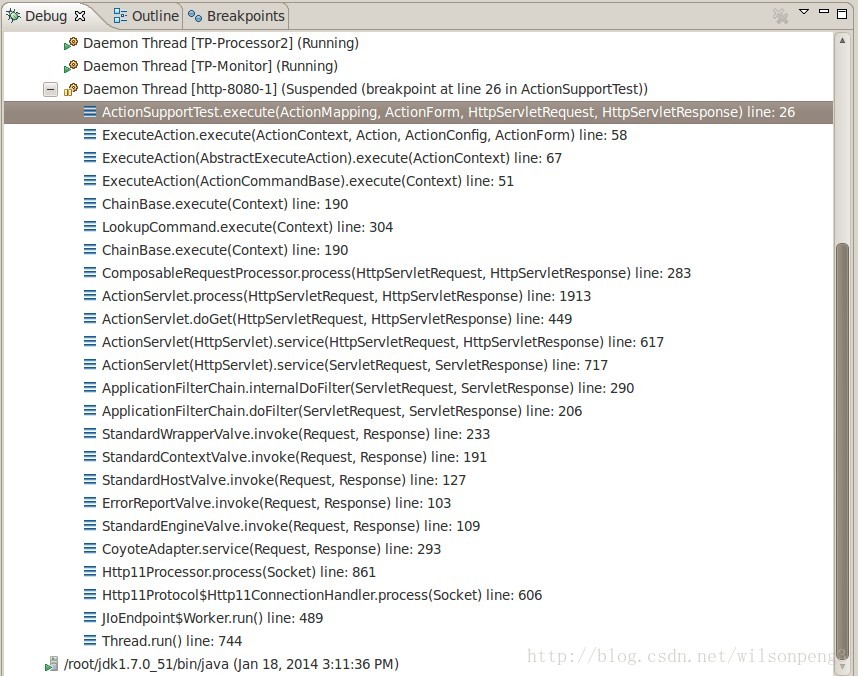
Tomcat+Struts1.x默认的ReqeustProcessor的请求处理流程
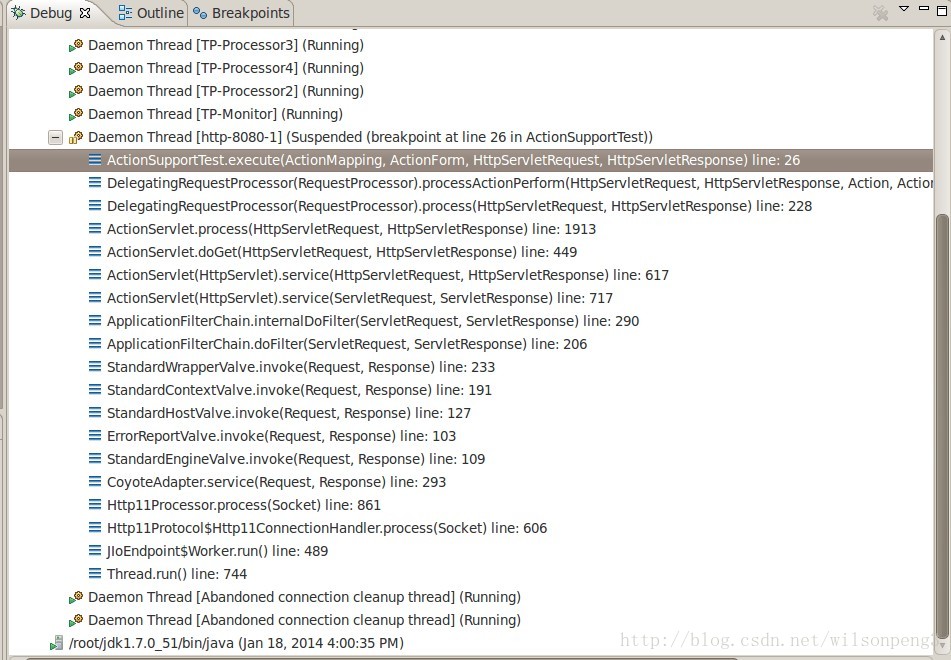
Tomcat+Struts+Spring2.5.x提供的DelegatingRequestProcessor的请求处理流程
Struts1.x默认的RequestProcessor得到Action的方法:processActionCreate
processActionCreate(HttpServletRequest request, HttpServletResponse response, ActionMapping mapping):
/** * <p>Return an <code>Action</code> instance that will be used to process * the current request, creating a new one if necessary.</p> * * @param request The servlet request we are processing * @param response The servlet response we are creating * @param mapping The mapping we are using * @return An <code>Action</code> instance that will be used to process * the current request. * @throws IOException if an input/output error occurs */ protected Action processActionCreate(HttpServletRequest request, HttpServletResponse response, ActionMapping mapping) throws IOException { // Acquire the Action instance we will be using (if there is one) String className = mapping.getType(); if (log.isDebugEnabled()) { log.debug(" Looking for Action instance for class " + className); } // If there were a mapping property indicating whether // an Action were a singleton or not ([true]), // could we just instantiate and return a new instance here? Action instance; synchronized (actions) { // Return any existing Action instance of this class instance = (Action) actions.get(className); if (instance != null) { if (log.isTraceEnabled()) { log.trace(" Returning existing Action instance"); } return (instance); } // Create and return a new Action instance if (log.isTraceEnabled()) { log.trace(" Creating new Action instance"); } try { instance = (Action) RequestUtils.applicationInstance(className); // Maybe we should propagate this exception // instead of returning null. } catch (Exception e) { log.error(getInternal().getMessage("actionCreate", mapping.getPath()), e); response.sendError(HttpServletResponse.SC_INTERNAL_SERVER_ERROR, getInternal().getMessage("actionCreate", mapping.getPath())); return (null); } actions.put(className, instance); } if (instance.getServlet() == null) { instance.setServlet(this.servlet); } return (instance); }Spring的DelegatingRequestProcessor得到Action的方法:
processActionCreate(HttpServletRequest request, HttpServletResponse response, ActionMapping mapping):
/** * Override the class method to return the delegate action. * @see #getDelegateAction */ protected Action processActionCreate( HttpServletRequest request, HttpServletResponse response, ActionMapping mapping) throws IOException { //先试图从Sping的Action容器中获取对应的Action,如果没有找到,再调用Strut提供的RequestProcessor的processActionCreate方法得到对应的Action。 Action action = getDelegateAction(mapping); if (action != null) { return action; }//如果没有找到,再调用Strut提供的RequestProcessor的processActionCreate方法得到对应的Action。 return super.processActionCreate(request, response, mapping); } /** * Return the delegate <code>Action</code> for the given mapping. * <p>The default implementation determines a bean name from the * given <code>ActionMapping</code> and looks up the corresponding * bean in the <code>WebApplicationContext</code>. * @param mapping the Struts <code>ActionMapping</code> * @return the delegate <code>Action</code>, or <code>null</code> if none found * @throws BeansException if thrown by <code>WebApplicationContext</code> methods * @see #determineActionBeanName */ protected Action getDelegateAction(ActionMapping mapping) throws BeansException { String beanName = determineActionBeanName(mapping); if (!getWebApplicationContext().containsBean(beanName)) { return null; } return (Action) getWebApplicationContext().getBean(beanName, Action.class); }继续阅读与本文标签相同的文章
上一篇 :
BT5 安装 Fcitx
下一篇 :
Spring的事务管理实现原理初探
-
数据结构复习
2026-06-02栏目: 教程
-
常见算法笔试或面试题
2026-06-02栏目: 教程
-
75道逻辑推理题及答案
2026-06-02栏目: 教程
-
面试题:看数字找规律
2026-06-02栏目: 教程
-
Spring编程式事务详解
2026-06-02栏目: 教程