
本文是一起学习造轮子系列的第二篇,本篇我们将从零开始写一个小巧完整的Redux,本系列文章将会选取一些前端比较经典的轮子进行源码分析,并且从零开始逐步实现,本系列将会学习Promises/A+,Redux,react-redux,vue,dom-diff,webpack,babel,kao,express,async/await,jquery,Lodash,requirejs,lib-flexible等前端经典轮子的实现方式,每一章源码都托管在github上,欢迎关注~
相关系列文章:
一起学习造轮子(一):从零开始写一个符合Promises/A+规范的promise
一起学习造轮子(二):从零开始写一个Redux
一起学习造轮子(三):从零开始写一个React-Redux
本系列github仓库:
一起学习造轮子系列github(欢迎star~)
前言
Redux是 状态容器,提供可预测化的状态管理。本文将会详细介绍Redux五个核心方法createStore,applyMiddleware,bindActionCreators,combineReducers,compose的实现原理,最后将自己封装一个小巧完整的redux库,随后会介绍一下经常与Redux一起结合使用的Redux常用中间件redux-logger,redux-thunk,redux-promise等中间件的实现原理。
本文对于Redux是什么及Redux几个核心方法如何使用只会做简单介绍,如果还没用过Redux建议先学习基础知识。
推荐文章:
Redux 入门教程(一):基本用法
Redux 入门教程(二):中间件与异步操作
Redux 入门教程(三):React-Redux 的用法
本文所有代码在github建有代码仓库,可以点此查看本文代码,也欢迎大家star~
开始
createStore
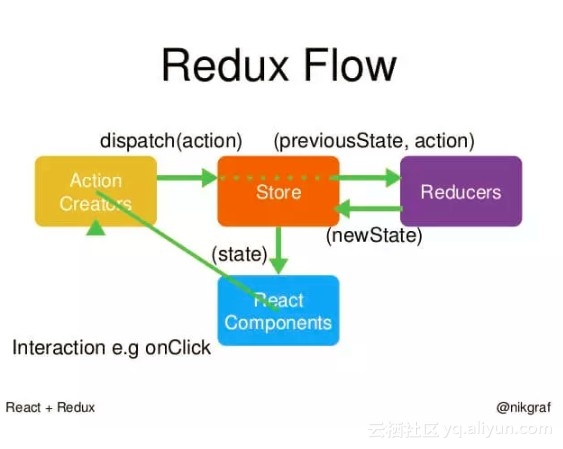
首先,我们先来看一种使用Redux的基础场景:
function reducer(state, action) {}const store = createStore(reducer) //用reducer生成了storestore.subscribe(() => renderApp(store.getState())) //注册state变化的回调renderApp(store.getState()) //初始化页面store.dispatch(xxxaction) //发出action
function createStore(reducer) { let state = null //用来存储全局状态 let listeners = [] //用来存储状态发生变化的回调函数数组 const subscribe = (listener) => { //用来注册回调函数 listeners.push(listener) } const getState = () => state //用来获取最新的全局状态 const dispatch = (action) => { //用来接收一个action,并利用reducer,根据旧的state和action计算出最新的state,然后遍历回调函数数组,执行回调. state = reducer(state, action) //生成新state listeners.forEach((listener) => listener()) //执行回调 } dispatch({}) //初始化全局状态 return { getState, dispatch, subscribe } //返回store对象,对象上有三个方法供外部使用}其实实现这个方法并不复杂
- 首先,定义2个变量,一个是state,一个是listeners,state用来存放全局状态,listeners用来存储状态发生变化的回调函数数组。
- 然后定义三个方法subscribe,getState,dispatch。subscribe用于注册回调函数,getState用来获取最新的state状态,dispatch用来接收一个action,并利用reducer,根据旧的state和action计算出最新的state,然后遍历回调函数数组,执行回调。
- 当调用createStore时,会先执行dispatch({})利用reducer生成一个初始state,然后返回一个store对象,对象上挂载着getState, dispatch, subscribe这三个方法供外部调用
经过以上三步,我们便实现了一个简单的createStore方法。
combineReducers
我们在开发稍微大一些的项目时reducer一般有多个,我们会一般会建立一个reducers文件夹,里面存储项目中用到的所有reducer,然后使用一个combineReducers方法将所有reducer合并成一个传给createStore方法。
import userInfoReducer from './userinfo.js'import bannerDataReducer from './banner.js'import recordReducer from './record.js'import clientInfoReducer from './clicentInfo.js'const rootReducer = combineReducers({ userInfoReducer, bannerDataReducer, recordReducer, clientInfoReducer})const store = createStore(rootReducer)接下来,我们就一起来实现combineReducers这个方法:
const combineReducers = reducers => (state = {}, action) => { let currentState = {}; for (let key in reducers) { currentState[key] = reducers[key](state[key], action); } return currentState;};{userInfoReducer,bannerDataReducer},userInfoReducer里state本来是这样:{userId:1,name:"张三"},而bannerDataReducer里的state本来是{pictureId:1,pictureUrl:"http://abc.com/1.jpg"}合并以后的currentState变为{ userInfoReducer: { userId: 1, name: "张三" }, bannerDataReducer: { pictureId: 1, pictureUrl: "http://abc.com/1.jpg" }}到此我们实现了第二个方法combineReducers。
bindActionCreators
接下来介绍bindActionCreators这个方法,这是redux提供的一个辅助方法,能够让我们以方法的形式来调用action。同时,自动dispatch对应的action。它接收2个参数,第一个参数是接收一个action creator,第二个参数接收一个 dispatch 函数,由 Store 实例提供。
比如说我们有一个TodoActionCreators
export function addTodo(text) { return { type: 'ADD_TODO', text };}export function removeTodo(id) { return { type: 'REMOVE_TODO', id };}我们之前需要这样使用:
import * as TodoActionCreators from './TodoActionCreators';let addReadAction = TodoActionCreators.addTodo('看书');dispatch(addReadAction);let addEatAction = TodoActionCreators.addTodo('吃饭');dispatch(addEatAction);let removeEatAction = TodoActionCreators.removeTodo('看书');dispatch(removeEatAction);现在只需要这样:
import * as TodoActionCreators from './TodoActionCreators';let TodoAction = bindActionCreators(TodoActionCreators, dispatch);TodoAction.addTodo('看书')TodoAction.addTodo('吃饭')TodoAction.removeTodo('看书')好了,说完了如何使用,我们来实现一下这个方法
function bindActionCreator(actions, dispatch) { let newActions = {}; for (let key in actions) { newActions[key] = () => dispatch(actions[key].apply(null, arguments)); } return newActions;}方法实现也不难,就是遍历ActionCreators里面的所有action,每个都使用一个函数进行包裹dispatch行为并将这些函数挂载到一个对象上对外暴露,当我们在外部的调用这个函数的时候,就会自动的dispatch对应的action,这个方法的实现其实也是利用了闭包的特性。
这个方法在使用react-redux里面经常见到,等讲react-redux实现原理时会再说一下。
compose
最后,还剩两个方法,一个是compose,一个是applyMiddleware,这两个都是使用redux中间件时要用到的方法,先来说说compose这个方法,这是一个redux里的辅助方法,其作用是把一系列的函数,组装生成一个新的函数,并且从后到前依次执行,后面函数的执行结果作为前一个函数执行的参数。
比如说我们有这样几个函数:
function add1(str) { return str + 1}function add2(str) { return str + 2}function add3(str) { return str + 3}let newstr = add3(add2(add1("abc"))) //"abc123"这只是3个,如果数量多了或者数量不固定处理起来就很麻烦,但是我们用compose写起来就很优雅:
let newaddfun = compose(add3, add2, add1);let newstr = newaddfun("abc") //"abc123"那compose内部是如何实现的呢?
function compose(...funcs) { return funcs.reduce((a, b) => (...args) => a(b(...args)));}其实核心代码就一句,这句代码使用了reduce方法巧妙地将一系列函数转为了add3(add2(add1(...args)))这种形式,我们使用上面的例子一步一步地拆分看一下,当调用compose(add3, add2, add1),funcs是add3, add2, add1,第一次进入时a是add3,b是add2,展开就是这样子:(add3, add2)=>(...args)=>add3(add2(...args)),传入了add3, add2,返回一个这样的函数(...args)=>add3(add2(...args)),然后reduce继续进行,第二次进入时a是上一步返回的函数(...args)=>add3(add2(...args)),b是add1,于是执行到a(b(...args)))时,b(...args)作为a函数的参数传入,变成了这种形式:(...args)=>add3(add2(add1(...args))),是不是很巧妙。
applyMiddleware
最后我们来看最后一个方法applyMiddleware,我们在redux项目中,使用中间件时一般这样写:
import thunk from 'redux-thunk'import logger from 'redux-logger'const middleware = [thunk, logger]const store = createStore(rootReducer, applyMiddleware(...middleware))function createStore(reducer, enhancer) { //如果传入了中间件函数,使用中间件增强createStore方法 if (typeof enhancer === 'function') { return enhancer(createStore)(reducer) } let state = null const listeners = [] const subscribe = (listener) => { listeners.push(listener) } const getState = () => state const dispatch = (action) => { state = reducer(state, action) listeners.forEach((listener) => listener()) } dispatch({}) return { getState, dispatch, subscribe }}然后接下来以redux-logger中间件为例来分析一下redux中间件的实现方式。 首先我们可以先思考一下,如果我们不用logger中间件,想实现logger的功能该怎样做呢?
let store = createStore(reducer);let dispatch = store.dispatch;store.dispatch = function (action) { console.log(store.getState()); dispatch(action); console.log(store.getState())};我们可以在原始dispatch方法外面包装一层函数,让发起真正的dispatch之前和之后都打印一下日志,调用时调用包装后的这个dispatch函数,其实redux中间件原理的思路就是这样的:将store的dispatch进行替换,换成一个功能增强了但是仍然具有dispach功能的新函数。
那applyMiddleware方法里是如何改造dispatch来增强功能的呢?首先我们来看个简单版本,假如我们只有一个中间件,如何实现applyMiddleware方法呢?
function applyMiddleware(middleware) { return function a1(createStore) { return function a2(reducer) { //取出原始dispatch方法 const store = createStore(reducer) let dispatch = store.dispatch //包装dispatch const middlewareAPI = { getState: store.getState, dispatch: (action) => dispatch(action) } let mid = middleware(middlewareAPI) dispatch = mid(store.dispatch) //使用包装后的dispatch覆盖store.dispatch返回新的store对象 return { ...store, dispatch } } }}//中间件let logger = function({ dispatch, getState }) { return function l1(next) { return function l2(action) { console.log(getState()); next(action) console.log(getState()) } } }//reducer函数function reducer(state, action) { if (!state) state = { count: 0 } console.log(action) switch (action.type) { case 'add': let obj = {...state, count: ++state.count } return obj; case 'sub': return {...state, count: --state.count } default: return state }}const store = createStore(reducer, applyMiddleware(logger))首先我们定义了的applyMiddleware方法,它接收一个中间件作为参数。然后定义了一个logger中间件函数,它接收dispatch和getState方法以供内部使用。这两个函数Redux源码里都是使用高阶函数实现的,在这里与源码保持一致也使用高阶函数实现,但是为了方便理解,使用具名的function函数代替匿名箭头函数可以看得更清晰。
当我们执行const store = createStore(reducer,applyMiddleware(logger))时,首先applyMiddleware(logger)执行,将logger存在闭包里,然后返回了一个接收createStore方法的函数a1,将a1这个函数作为第二个参数传入createStore方法,因为传入了第二个参数,所以createstore里面其实会执行这一段代码:
if (typeof enhancer === 'function') { return enhancer(createStore)(reducer)}当执行return enhancer(createStore)(reducer),其实执行的是a1(createStore)(reducer),当执行a1(createStore)时返回a2,最后return的是a2(reducer)的执行结果。
然后,我们看看a2内部都做了些什么,我给这个函数定义了三个阶段,首先为取出原始dispatch阶段,这一阶段执行
createStore(reducer)方法,并拿出原始的dispatch方法。接着,我们到了第二个阶段包装原始dispatch,首先我们定义了middlewareAPI用来给中间件函数使用,这里的getState直接使用了store.getState,而dispatch使用函数包了一层,
(action)=>dispatch(action),为什么呢,因为我们最终要给中间件使用的dispatch方法,一定是经过各种中间件包装后的dispatch方法,而不是原方法,所以我们这里将dispatch方法设置为一个变量。然后将middlewareAPI传入middleware执行,返回一个函数mid(也就是logger里面的l1),这个函数接收一个next方法作为参数,然后当我们执行dispatch = mid(store.dispatch)时,将store.dispatch作为next方法传入,并把返回的函数l2作为新的dispatch,我们可以看到新的dispatch方法其实里面做了和我们上面自己直接改造store.dispatch做了同样的事情:
function l2(action) { console.log(getState()); next(action) console.log(getState())}都是接收一个action,先打印日志,然后执行原始的dispatch方法去发一个action,然后再打印日志。
最后到了第三个阶段:使用包装后的dispatch覆盖store.dispatch方法后返回新的store对象。
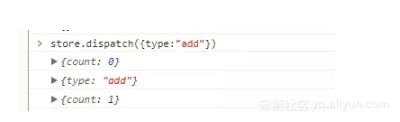
到此,当我们在外面执行store.dispatch({type:add})时,实际上执行的是包装后的dispatch方法,所以logger中间件就生效了,如图所示真正发起dispatch的前后都打印出了最新状态:
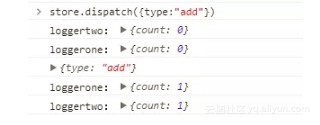
import compose from './compose';function applyMiddleware(...middlewares) { return function a1(createStore) { return function a2(reducer) { const store = createStore(reducer) let dispatch = store.dispatch let chain = [] const middlewareAPI = { getState: store.getState, dispatch: (action) => dispatch(action) } chain = middlewares.map(middleware => middleware(middlewareAPI)) dispatch = compose(...chain)(store.dispatch) return { ...store, dispatch } } }}let loggerone = function({ dispatch, getState }) { return function loggerOneOut(next) { return function loggerOneIn(action) { console.log("loggerone:", getState()); next(action) console.log("loggerone:", getState()) } }}let loggertwo = function({ dispatch, getState }) { return function loggerTwoOut(next) { return function loggerTwoIn(action) { console.log("loggertwo:", getState()); next(action) console.log("loggertwo:", getState()) } }}const store = createStore(reducer, applyMiddleware([loggertwo, loggerone]))首先当调用applyMiddleware方法时,由传入一个中间件变为传入一个中间件数组。
然后我们在applyMiddleware方法中维护一个chain数组,这个数组用于存储中间件链。
当执行到 chain = middlewares.map(middleware => middleware(middlewareAPI))时,chain里面存放的是[loggerTwoOut,loggerOneOut]。
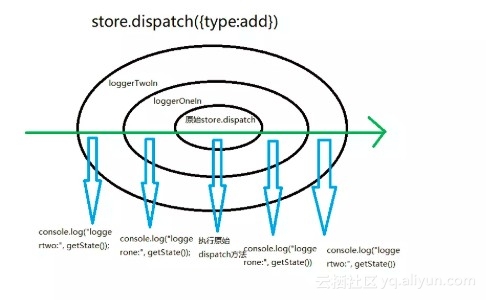
然后下一步我们改造dispatch时用到了我们之前讲过的compose方法,dispatch=compose(...chain)(store.dispatch)其实相当于是执行了dispatch =loggerTwoOut(loggerOneOut(store.dispatch)),然后这一句loggerTwoOut(loggerOneOut(store.dispatch))再次拆开看一下是如何执行的,当执行loggerOneOut(store.dispatch),返回loggerOneIn函数,并将store.dispatch方法作为loggerOneIn里面的next方法。现在函数变成了这样:loggerTwoOut(loggerOneIn),当执行这一句时,返回loggerTwoIn函数,并将loggerOneIn作为loggerTwoIn方法里的next方法。最后给dispatch赋值:dispatch =loggerTwoIn。
在外部我们调用store.dispatch({type:add})时,实际执行的是loggerTwoIn({type:add}),所以会先执行 console.log("loggertwo:", getState()),然后执行next(action)时执行的其实是loggerOneIn(action),进入到loggerOneIn内部,所以会执行console.log("loggerone:",getState());然后执行next(action),这里的其实执行的是原始的store.dispatch方法,所以会真正的把action提交,提交完后继续执行,执行console.log("loggerone:",getState()),然后loggerOneIn执行完毕,执行权交还到上一层loggerTwoIn,loggerTwoIn继续执行,执行console.log("loggertwo:", getState()),结束。
function applyMiddleware(...middlewares) { return (createStore) => (reducer, preloadedState, enhancer) => { const store = createStore(reducer, preloadedState, enhancer) let dispatch = store.dispatch let chain = [] const middlewareAPI = { getState: store.getState, dispatch: (action) => dispatch(action) } chain = middlewares.map(middleware => middleware(middlewareAPI)) dispatch = compose(...chain)(store.dispatch) return { ...store, dispatch } }}我们实现的applyMiddleware方法对比官方除了没有对前后端同构时预取数据preloadedState做支持外,其余功能都完整实现了。到此我们把redux里所有方法都实现了一遍,当然我们实现的只是每个方法最核心最常用的部分,并没有将redux源码逐字逐句去翻译。因为个人认为对于源码的学习应该抓住主线,学习源码中的核心代码及闪光点,如果对redux其他功能感兴趣的,可以自行看官方源码学习。
常用中间件 redux-logger,redux-thunk,redux-promise
接下来,我们将redux常用的三个中间件来实现一下
redux-logger
let logger = function({ dispatch, getState }) { return function(next) { return function(action) { console.log(getState()); next(action) console.log(getState()) } } }这个我们上面讲applyMiddleware时已经讲过了,不再多说。
redux-thunk
redux-thunk在我们平常使用时主要用来处理异步提交action情况,引入了redux-thunk后我们可以异步提交action
const fetchPosts = post => (dispatch, getState) => { dispatch(requestPosts(post )); return fetch(`/some/API/${post }.json`) .then(response => response.json()) .then(json => dispatch(receivePosts(post , json)));};store.dispatch(fetchPosts('reactjs'))我们可以看到fetchPosts('reactjs')返回的是一个函数,而redux里的dispatch方法不能接受一个函数,Redux官方源码中明确说了,action必须是一个纯粹的对象,处理异步action时需要使用中间件,
function dispatch(action) { if (!isPlain (action)) { throw new Error( 'Actions must be plain s. ' + 'Use custom middleware for async actions.' ) } ......}那redux-thunk到底做了什么使dispatch可以传入函数呢?
let thunk = function({ getState, dispatch }) { return function(next) { return function(action) { if (typeof action == 'function') { action(dispatch, getState); } else { next(action); } } }}thunk中间件在内部进行判断,如果传入了一个函数,就去执行它,不是函数就不管交给下一个中间件,以上面的fetchPosts为例,当执行
store.dispatch(fetchPosts('reactjs'))时,给dispatch传入了一个函数:post => (dispatch, getState) => { dispatch(requestPosts(post )); return fetch(`/some/API/${post }.json`) .then(response => response.json()) .then(json => dispatch(receivePosts(post , json)));};thunk中间件发现是个函数,于是执行它,先发出一个Action(requestPosts(post )),然后进行异步操作。拿到结果后,先将结果转成 JSON 格式,然后再发出一个Action(receivePosts(post ,json))。这两个Action都是普通对象,所以当dispatch时会走else {next(action);}这个分支,继续执行.这样就解决了dispatch不能接受函数的问题。
redux-promise
最后讲一个redux-promise中间件.dispatch目前可以支持传入函数了,利用redux-promise我们再让它支持传入promise对象,平时我们在用这个中间件时,一般有两种用法:写法一,返回值是一个 Promise 对象。
const fetchPosts = (dispatch, post ) => new Promise(function(resolve, reject) { dispatch(requestPosts(post )); return fetch(`/some/API/${post }.json`) .then(response => { type: 'FETCH_POSTS', payload: response.json() }); });写法二,Action 对象的payload属性是一个Promise对象。这需要从redux里引入createAction方法,并且写法也要变成下面这样。
import { createAction } from 'redux-actions';class AsyncApp extends Component { componentDidMount() { const { dispatch, selectedPost } = this.props // 发出同步 Action dispatch(requestPosts(selectedPost)); // 发出异步 Action dispatch(createAction( 'FETCH_POSTS', fetch(`/some/API/${post }.json`) .then(response => response.json()) )); }}让我们来实现一下redux-promise中间件:
let promise = function({ getState, dispatch }) { return function(next) { return function(action) { if (action.then) { action.then(dispatch); } else if (action.payload && action.payload.then) { action.payload.then(payload => dispatch({...action, payload }), payload => dispatch({...action, payload })); } else { next(action); } } } }我们实现redux-thunk时是判断如果传入function就执行这个function,否则next(action)继续执行;redux-promise同理,当action或action的payload上面有then方法时,我们认为它是promise对象,就让dispatch到promise的then里面再执行,直到dispatch提交的action没有then方法,我们认为它不是promise了,可以执行next(action)交给下一个中间件执行了。
最后
本篇介绍了Redux五个方法createStore,applyMiddleware,bindActionCreators,combineReducers,compose的实现原理,并自己封装了一个小巧完整的Redux库,同时简单介绍了Redux里常用的3个中间件redux-logger,redux-thunk,redux-promise的实现原理,本文所有代码在github建有代码仓库,可以点击查看本文源码。
与Redux相关的比较经典的轮子还有React-Redux和redux-saga,因本文篇幅现在已经很长,所以这两个轮子的实现将放到后续的一起学习造轮子系列中,敬请关注~
原文作者:
本文来源: 掘金 如需转载请联系原作者
继续阅读与本文标签相同的文章
-
基于mpvue开发微信小程序,vue能用的,用mpvue哪些情况不能用
2026-06-02栏目: 教程
-
linux下查看CPU、内存、磁盘信息
2026-06-02栏目: 教程
-
Promise 串行调用面试题
2026-06-02栏目: 教程
-
7月17日云栖精选夜读丨用技术传递专业的力量,阿里云将重磅推出《MVP Time》
2026-06-02栏目: 教程
-
使用VUE实现textarea固定输入行数与添加下划线样式.
2026-06-02栏目: 教程